
Award Ceremony — Stage Scenic Environment
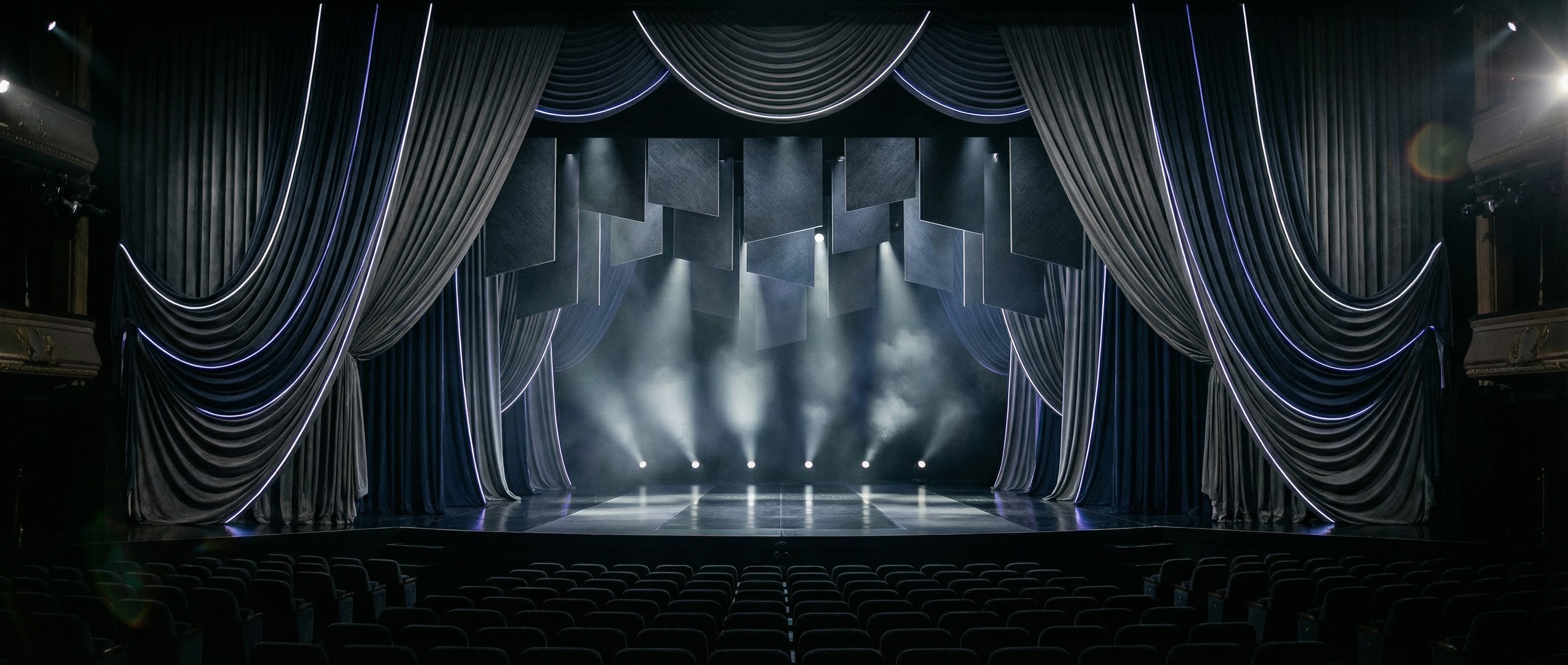
Overview
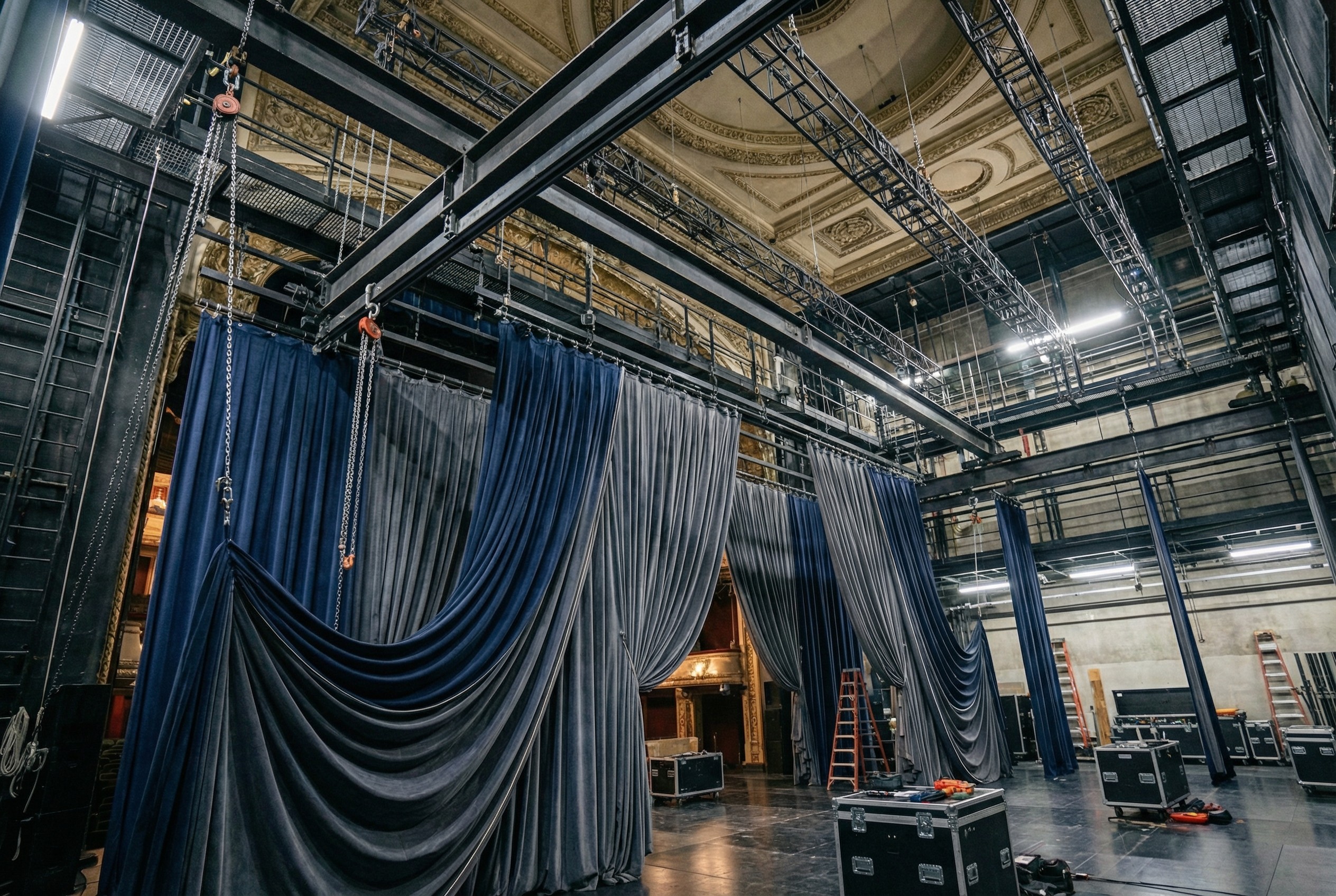
Full stage scenic for a nationally televised award ceremony. 80-foot proscenium with layered drape architecture, motorized flying panels, and integrated LED surfaces designed to read on both camera and in-room. Union crew coordination across IATSE jurisdictions, broadcast-grade finish standards, and precision timing for live transitions between presenter segments.
Mandate
Design and execute a stage scenic environment that serves two audiences simultaneously — the in-room experience of 3,200 attendees and the broadcast camera capturing for a national audience. Every surface, transition, and lighting state must perform at both scales.

Execution Scope
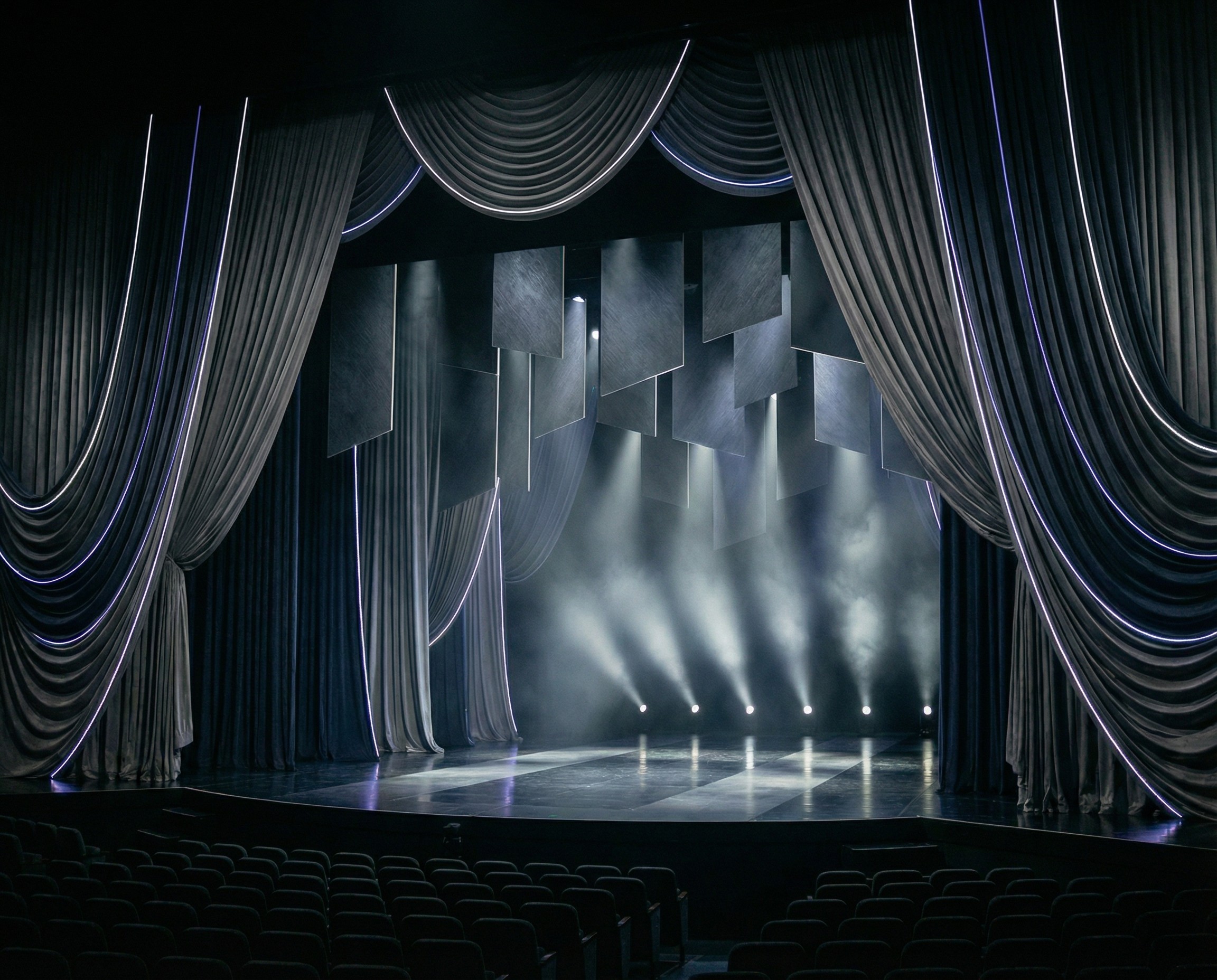
- Scenic design in Vectorworks — full 3D model with camera-angle verification
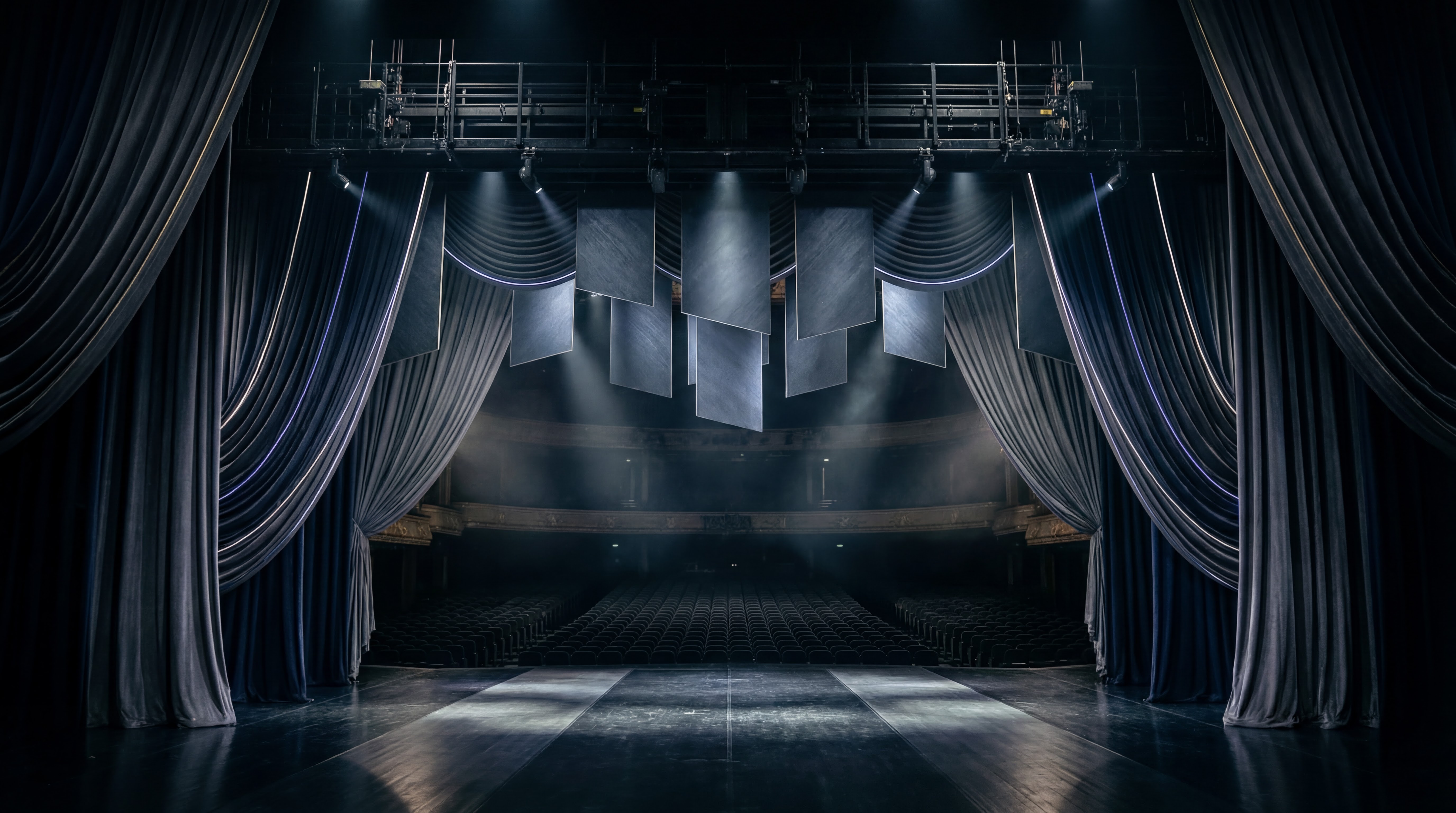
- Proscenium drape architecture — layered system with independently flyable panels
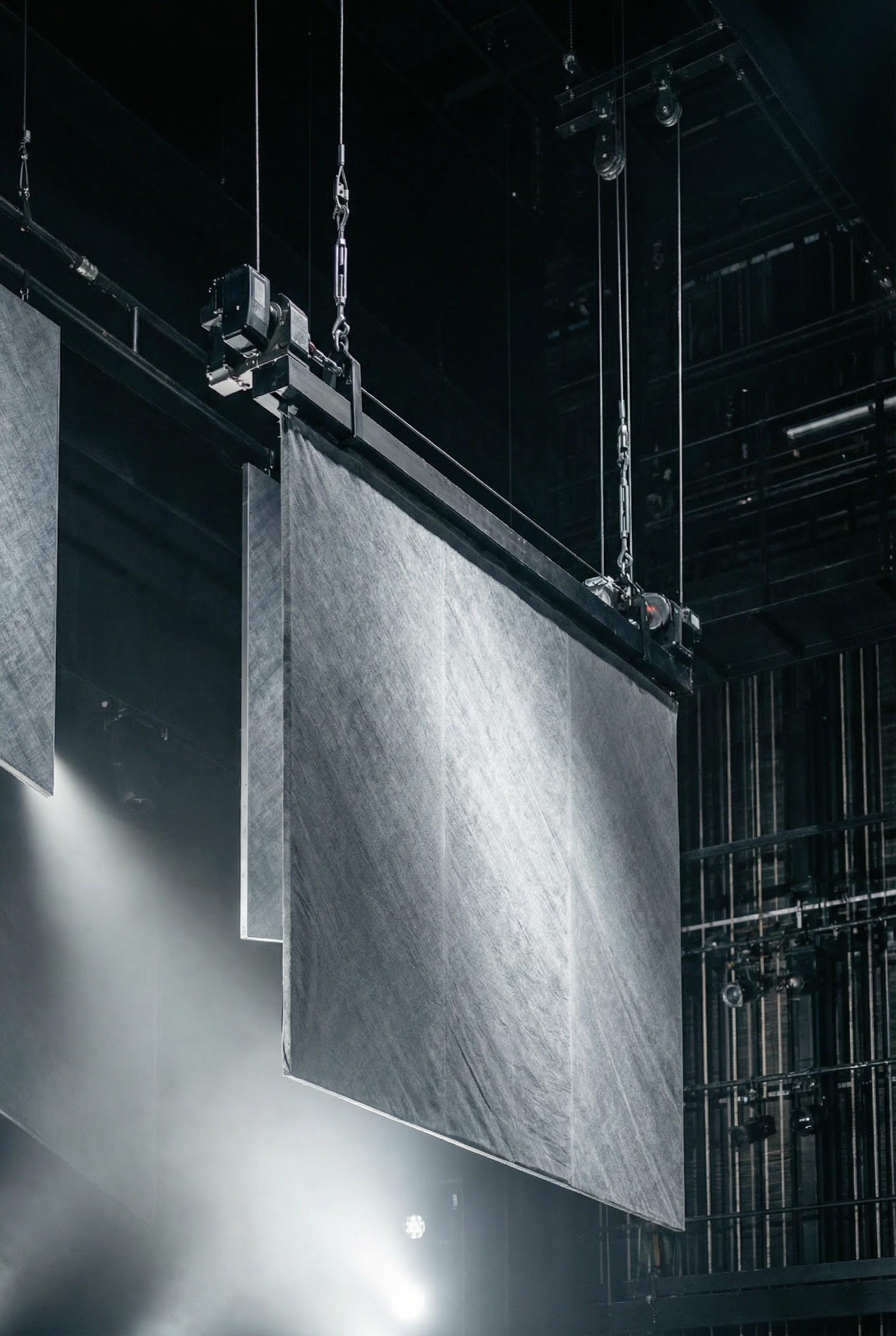
- Motorized flying system engineering — counter-weighted battens with show-control integration
- LED surface integration within drape architecture — seamless scenic-to-digital transitions
- Broadcast-grade finish standards — all surfaces verified under HD camera test
- IATSE crew coordination across stagehand, rigging, and electrical jurisdictions
- Live show operations — scenic transitions executed during broadcast
- Post-show strike coordinated with broadcast equipment out
Constraints
- Broadcast camera requiring all surfaces to read without moiré, banding, or reflection artifacts
- Live transitions between segments requiring silent scenic movement during active broadcast
- IATSE jurisdictional requirements governing crew allocation across rigging, electric, and carpentry
- 3,200-seat venue requiring scenic to read at scale while maintaining detail for camera close-ups
- Compressed load-in sharing venue with rehearsal schedule — scenic install during overnight windows only
- Fire marshal requirements for flame certification on all fabric and scenic soft goods
S.I.C. Notes
Systems
Rigging infrastructure installed during first overnight window. Drape architecture hung and tensioned during second. LED integration and show-control commissioning during third. No phase overlap.
Intelligence
Camera positions and lens selections documented 45 days prior. Every scenic surface rendered from each camera angle in Vectorworks to verify broadcast readability before fabrication.
Control
HD camera test conducted 48 hours pre-broadcast. All scenic surfaces verified for moiré, color accuracy, and reflection. Show-control dry run executed with full transition sequence.

Operational Metrics
Outcomes
- All 24 scenic transitions executed on cue during live broadcast without visible or audible issues
- HD camera test passed on first review — no surface remediation required
- Scenic environment received production design recognition from broadcast industry press
- Full strike completed within 18 hours of broadcast wrap, venue restored for next booking